

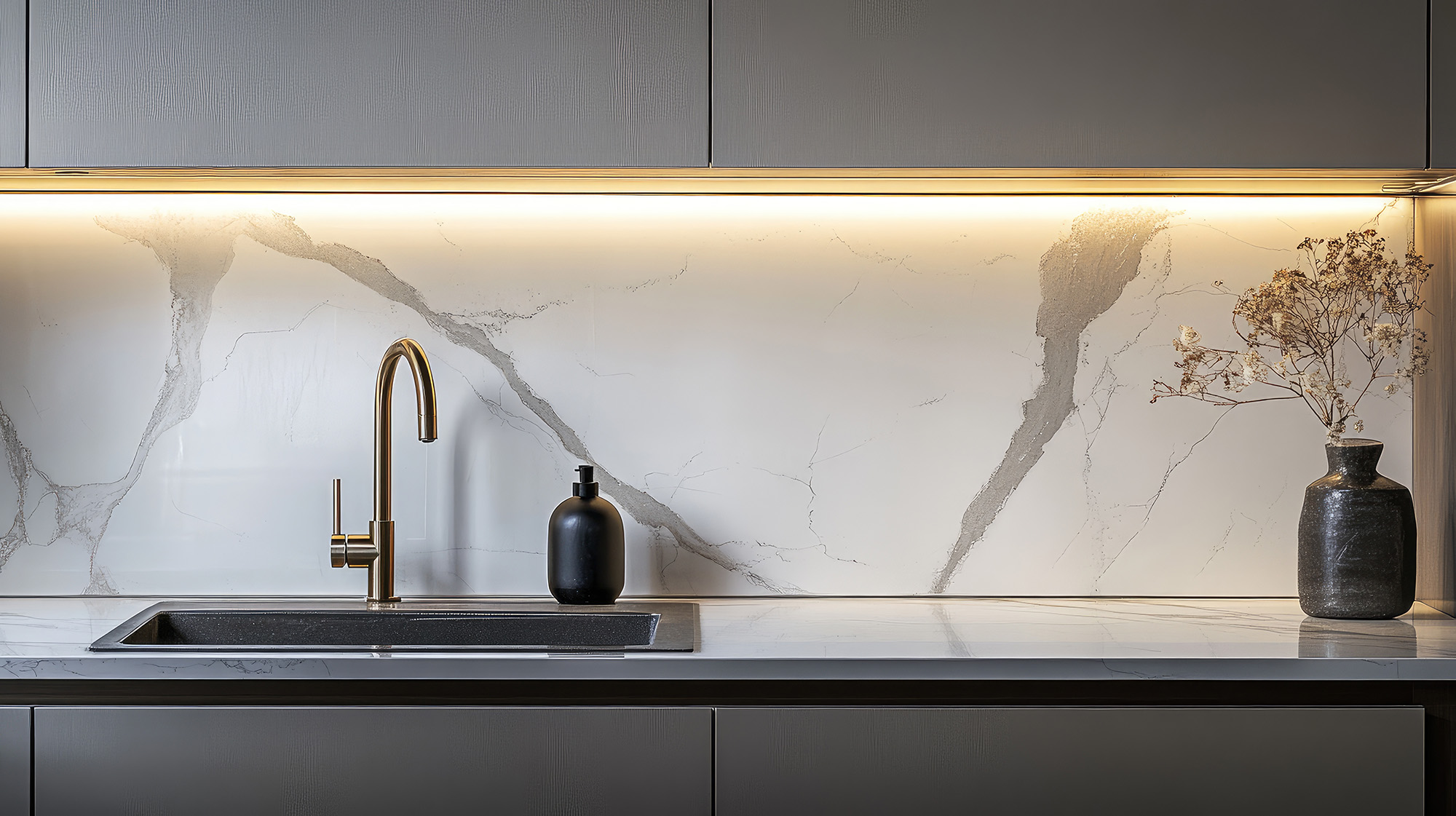
Quartz and porcelain countertops dominate modern Houston kitchens—but most homeowners choose between them based on appearance, not performance. At JN Tile, serving homeowners through our La porte, TX, we see failures that stem from one overlooked issue: thermal shock and expansion physics in Texas kitchens.
Houston’s heat, humidity, and appliance loads make this comparison far more technical than most blogs admit.
Understanding Thermal Expansion in Countertop Materials
Every material expands when heated and contracts when cooled. The critical factor is Coefficient of Thermal Expansion (CTE).
Quartz (engineered stone): Higher CTE due to resin content
Porcelain slabs: Extremely low CTE due to kiln-fired density
In Houston kitchens, where:
Sunlight heats surfaces unevenly
Cooktops create localized thermal spikes
Cold liquids hit hot surfaces
CTE differences matter more than brand names.
Why Quartz Can Fail Under Thermal Stress
Quartz countertops contain ~90% natural stone and ~10% polymer resins. That resin:
Expands faster than stone
Softens slightly under high heat
Is vulnerable to rapid temperature changes
Common Houston failure scenarios:
Hot pan placed near a cool sink zone
Sun-heated slab cooled rapidly by AC
Cooktop heat radiating beneath thin quartz
This leads to thermal shock fractures—often diagonal and sudden.
Porcelain’s Advantage in Texas Kitchens
Porcelain slabs are fired at temperatures exceeding 2,200°F. This results in:
Near-zero porosity
Exceptional thermal stability
Resistance to rapid temperature changes
Porcelain can handle:
Direct sunlight without warping
Hot cookware (within manufacturer limits)
Extreme Houston summer heat cycling
From a thermal standpoint, porcelain is engineered for Texas.
Expansion Gaps: The Silent Failure Point
Both quartz and porcelain require proper expansion allowances:
At walls
Around cooktops
Near dishwashers and ovens
Quartz is less forgiving. Improper gaps cause:
Edge lifting
Stress cracking at corners
Failure months after installation
Porcelain tolerates stress better—but still requires precision cutting and substrate flatness.
Cabinet Deflection & Load Transfer
Houston cabinets often span long runs over slab foundations. Under load:
Quartz transfers stress directly
Porcelain distributes stress more evenly due to density
This is why unsupported overhangs fail more often with quartz if steel reinforcement is underspecified.
Which Is Right for Houston Kitchens?
Choose quartz for controlled indoor environments with proper heat management
Choose porcelain for high-heat zones, sun exposure, and long-span installations
The wrong choice isn’t aesthetic—it’s mechanical.
Final Thoughts
At JN Tile, we don’t merely sell countertops—we match materials to Houston physics. Homeowners across La porte, TX, Deer park, TX, Pasadena, TX, Seabrook, TX, and Houston, TX rely on us to prevent costly failures before they happen.
Contact JN Tile today to compare quartz and porcelain countertops with experts who understand thermal shock, expansion tolerances, and real-world Houston kitchens.


