

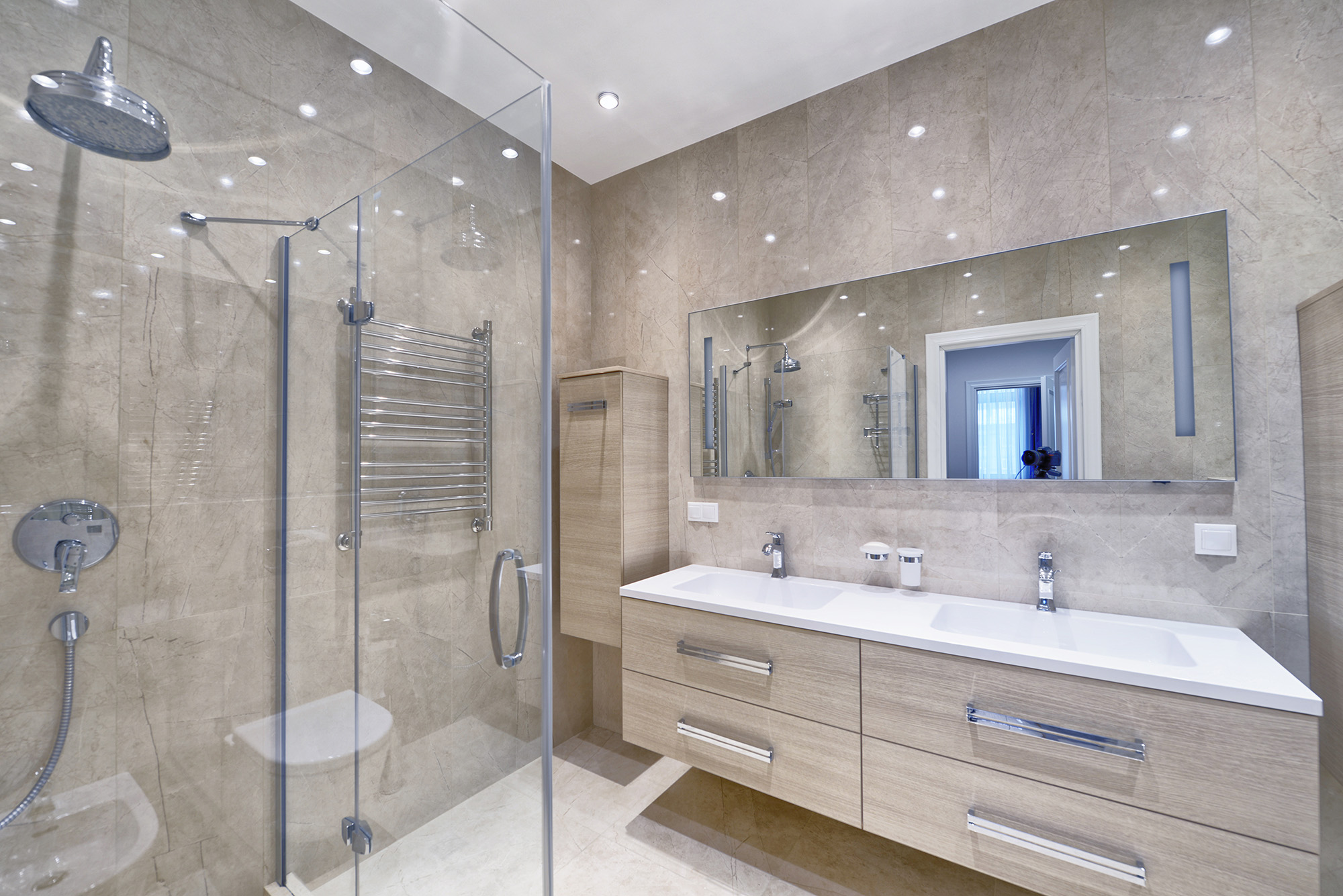
A beautiful shower isn’t just tile and glass — it’s a waterproofing system, drainage structure, and engineered slope working together to keep mold from forming behind the walls or underneath the floor.
At JN Tile, we’ve rebuilt countless Houston-area showers where mold started because the drain system was outdated or improperly installed. The right drain design can make the difference between a spa-quality shower and one that slowly grows moisture problems you can’t see until it’s too late.
Why Drain Design Matters More Than Most People Realize
Showers fail in Texas for one main reason: water doesn’t move fast enough or far enough away from the tile surface. In humid climates like La Porte, Pasadena, and Seabrook, moisture has nowhere to go.
That’s when mold starts.
A drain is not just a hole in the floor — it’s part of a system that controls:
• how water slopes toward the exit
• how long moisture remains under tile
• how quickly shower floors dry
• whether water pools in corners
• the health of materials behind the walls
A poor drain system can lead to costly tear-outs within 5–7 years.
Linear Drains - A Game Changer for Modern Bathrooms
Linear drains have become one of the most effective mold-prevention tools in modern shower design.
Benefits include:
• faster water evacuation
• consistent slope in one direction
• less pooling
• easier cleaning
• more flexible tile layout options
These drains pair especially well with large-format tiles, which reduce grout lines — another mold-prone area.
Hidden Drains: Beautiful and Efficient
Hidden or “tile-in” drains disguise the drain under a tile cover, creating a sleek look while improving drainage.
They work by:
• increasing drain surface area
• enhancing water capture
• reducing visual clutter
• improving slope precision
They combine luxury appearance with strong functional performance, especially in spa-style showers.
Traditional Center Drains Still Work — When Installed Correctly
Many Texas homes still use center drains, which are perfectly functional when paired with the correct waterproofing system.
The common failure happens when:
• the slope is inconsistent
• waterproofing doesn’t extend high enough
• grout is left unsealed
• low-quality pan liners are used
When we install center drains, we use modern waterproofing membranes like Schluter® systems to ensure durability.
The Role of Proper Sloping: Where Mold Starts
Slope is everything. If water lingers, mold follows.
Correct shower floors must slope ¼ inch per foot.
But here’s what often goes wrong in new builds:
• uneven slope creates micro-pools
• corners sit slightly lower
• tile height variations slow drying
• waterproofing doesn’t follow the slope
We redesign slopes to move water aggressively toward drains without affecting comfort.
Why Drain Placement Matters
The drain shouldn’t just be centered — it should be positioned based on how people actually use the shower.
Key considerations include:
• avoiding placement where you stand
• ensuring water moves away from walls
• capturing water from rainfall heads
• aligning with benches or niches
Strategic drain placement speeds drying and stops mold at its source.
The Waterproofing System Behind the Drain
A drain is only as good as the waterproofing connected to it.
At JN Tile, we use:
• full-coverage waterproof membranes
• sealed seams and corners
• pre-sloped pans
• vapor-management layers
• mold-resistant backer boards
This ensures the drain works as part of a complete water-management system.
A shower should be a relaxing space — not a hidden mold farm. Smart drain design is one of the most powerful ways to protect your home and enjoy a long-lasting, spa-quality bathroom. Call today for a professional shower evaluation or bathroom remodel. We proudly serve homeowners across La porte, TX, Deer park, TX, Pasadena, TX, Seabrook, TX, and Houston, TX with expert bathroom craftsmanship built for Texas humidity.


