

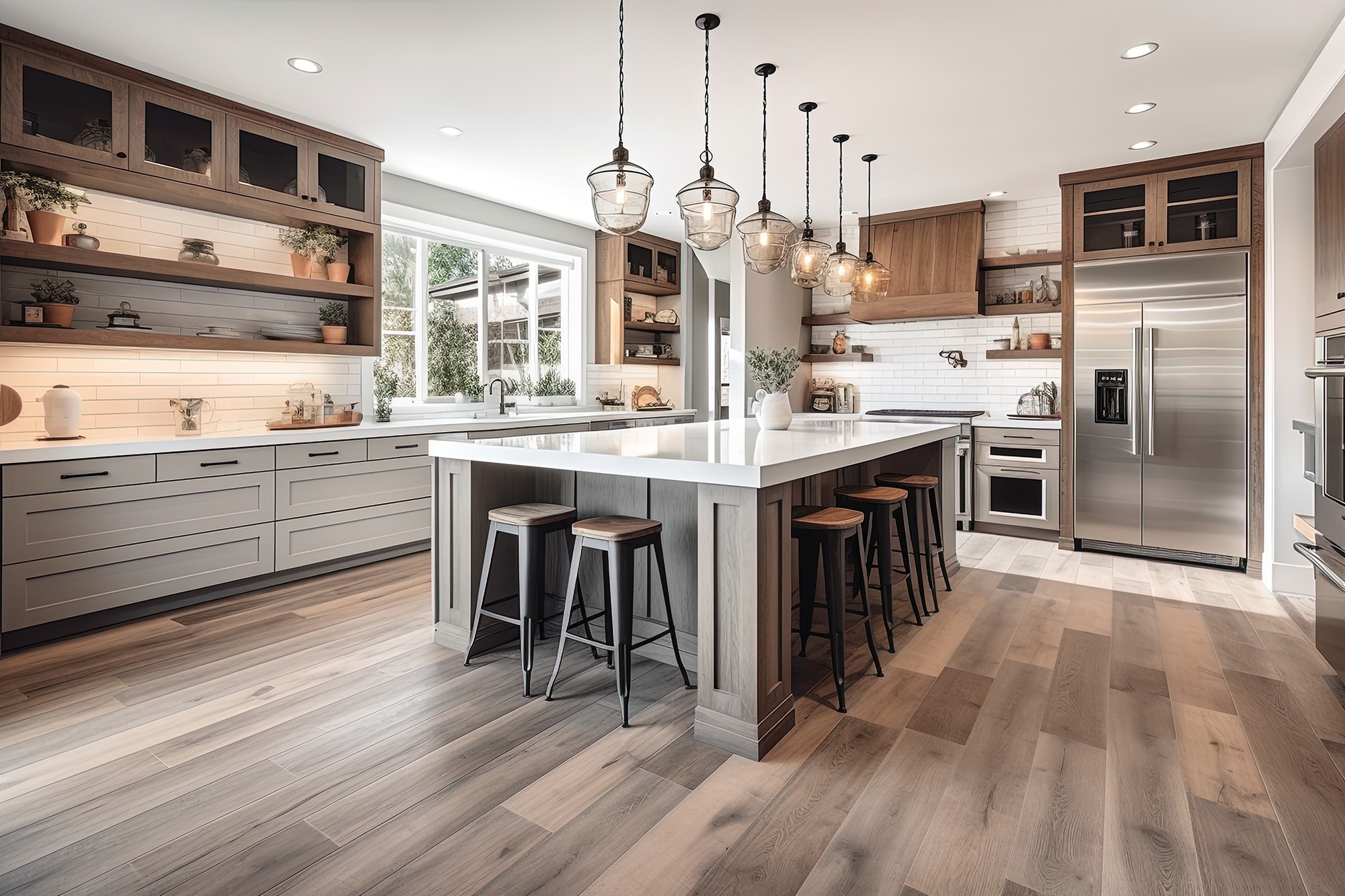
Walk into any tile or stone showroom and everything looks flawless. But once installed in a real Pasadena, TX kitchen—over a concrete slab, exposed to humidity swings, heat, and structural movement—that same tile can crack, tent, or debond within months. At JN Tile, with showrooms across La porte, TX, many of the failed kitchen remodels we’re asked to assess have one thing in common: TCNA standards were ignored or misunderstood.
The Tile Council of North America (TCNA) doesn’t publish design inspiration—it publishes failure prevention manuals. When kitchens fail, the TCNA Handbook almost always explains why.
The Most Common TCNA Violations in Pasadena Kitchens
1. No Movement Accommodation (EJ171 Violations)
Pasadena homes are primarily slab-on-grade, and concrete in Southeast Texas moves—thermally and structurally. TCNA EJ171 requires perimeter movement joints and interior expansion joints based on tile size, sunlight exposure, and substrate conditions.
When installers hard-grout tile against cabinets, walls, or islands, stress has nowhere to go. The result?
Tile tenting
Hairline grout cracking
Audible popping sounds months after install
These are not “settling issues.” They are physics problems.
2. Incorrect Substrate Flatness for Large-Format Tile
Modern kitchens favor 12x24, 24x24, and plank-style tiles. TCNA requires substrates to be flat within:
1/8” in 10 feet for large-format tile
Most slab foundations in Pasadena do not meet this without corrective prep. Skipping self-leveling underlayment leads to:
Lippage
Hollow spots
Premature tile failure under rolling appliances
Flatness is not cosmetic—it determines load distribution.
3. Wrong Thinset for Texas Conditions
TCNA references ANSI standards for mortars, but many failures trace back to using A118.1 or basic A118.4 thinsets where A118.15 is required.
In Pasadena kitchens:
Heat from south-facing windows
High interior humidity
Thermal cycling from cooking appliances
Demand high-performance polymer-modified mortars. Without them, tiles shear off the slab under stress.
4. No Crack Isolation Over Known Slab Stress Points
TCNA does not say if cracks will occur—it assumes they will. That’s why methods like F125 and F128 exist.
Skipping crack isolation membranes over:
Control joints
Hairline slab cracks
High-traffic kitchen zones
Leads to reflective cracking, where slab movement telegraphs directly through tile.
Why Pasadena Kitchens Fail Faster Than Other Areas
Pasadena sits in a zone of:
Expansive clay soils
High groundwater variability
Extreme summer slab temperature differentials
TCNA standards are minimums, not upgrades. In this region, exceeding them is often the difference between a 3-year floor and a 30-year floor.
Why TCNA Compliance Is a Design Decision, Not Just an Install One
Tile selection, layout, grout width, and even cabinet placement affect compliance. A kitchen remodel that looks perfect on Instagram can still violate TCNA standards on:
Tile span-to-thickness ratios
Grout joint sizing for rectified tile
Load-bearing capacity beneath heavy islands
At JN Tile, TCNA standards are integrated before materials are chosen—not after something fails.
The Real Cost of Ignoring TCNA Guidelines
Most failed kitchens aren’t covered by manufacturer warranties because:
Installation didn’t follow TCNA methods
Substrate prep was skipped
Required membranes weren’t used
The homeowner pays twice.
Final Thoughts & Local Expert Help
If your kitchen remodel is being planned—or already showing signs of failure—TCNA standards tell the full story. At JN Tile, we help homeowners across La porte, TX, Deer park, TX, Pasadena, TX, Seabrook, TX, and Houston, TX design kitchens that are engineered for Texas conditions, not just styled for showrooms.
Contact JN Tile today to consult with experts who understand TCNA standards, slab behavior, and long-term performance—not shortcuts.


