

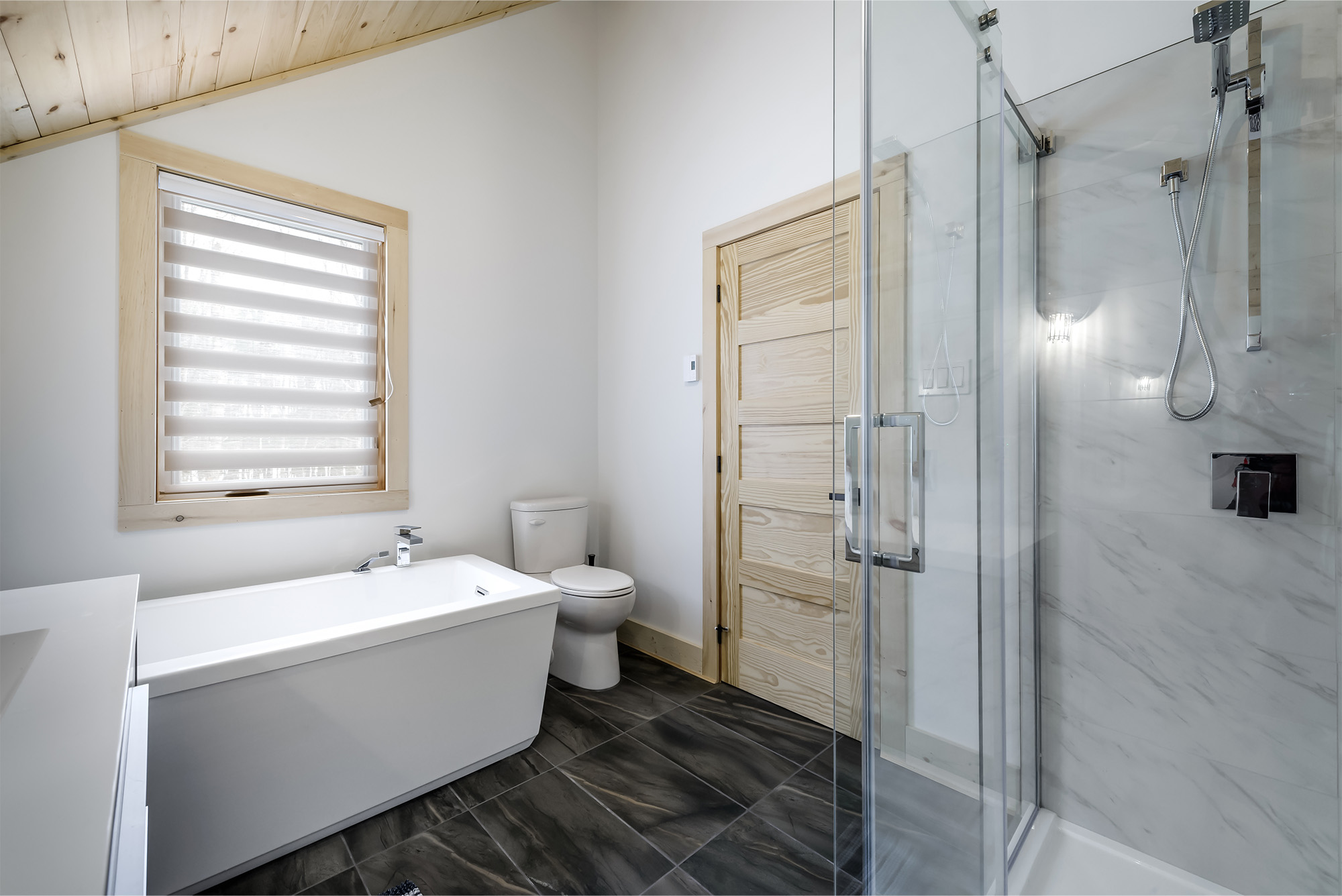
Homeowners often blame grout, drains, or ventilation when showers stay wet—but in reality, most chronic moisture problems start beneath the tile. At JN Tile, we routinely see shower failures across Seabrook and surrounding areas caused by improper pan slope during installation. If water can’t move toward the drain efficiently, it pools, stagnates, and eventually feeds mold growth beneath the tile surface.
The Code Requirement Most Installers Get Wrong
Per TCNA (Tile Council of North America) and plumbing code standards, shower pans must be sloped ¼ inch per linear foot toward the drain. Sounds simple—but execution is where things fall apart.
Common slope-related errors include:
Flat pans with “spot slope” near the drain
Inconsistent pitch causing low spots (“bird baths”)
Over-sloping that pushes water toward walls instead of the drain
Pre-sloped pans installed backwards or altered on-site
In humid coastal areas like Seabrook, even minor slope deviations are amplified because evaporation rates are slower and moisture lingers longer.
Why Standing Water Leads to Mold—Even With “Waterproof” Tile
Tile and grout are not waterproof. Water passes through the grout joints and into the setting bed. When the pan slope is incorrect:
Water becomes trapped in the mortar bed
Organic debris accumulates
Mold colonizes below the surface where cleaners can’t reach
This is especially problematic when installers skip:
Proper weep hole protection
Drain flange integration
Continuous waterproofing membranes
Standing water at the surface is just the symptom—the real damage is happening underneath.
Linear Drains Make Slope Errors Worse (If Installed Wrong)
Linear drains are popular in Seabrook remodels for their sleek look and curbless designs. But they demand precision-level slope control.
We commonly see:
Incorrect single-plane slope alignment
Drain channels set higher than the tile field
Inadequate perimeter waterproofing at the drain body
When linear drains are installed without laser-level verification and manufacturer-specific details, water stalls immediately—creating a mold-prone environment.
Pre-Slope vs Surface Waterproofing: Where Installations Fail
Traditional shower systems require:
A pre-slope beneath the liner
A secondary slope to the finished drain
Modern surface-applied systems (like bonded waterproof membranes) eliminate one layer—but only if installed correctly.
Failures occur when:
Installers skip the pre-slope entirely
Membranes are not fully bonded at drain transitions
Corners and penetrations aren’t reinforced
At JN Tile, slope verification happens before waterproofing ever begins—because once tile is installed, the damage is already locked in.
How Professionals Verify Proper Shower Slope
True professionals don’t eyeball slope—they measure it.
Correct slope verification includes:
Laser level or digital inclinometer checks
Flood testing before tile installation
Drain flow tests with full water volume
Surface flatness checks to prevent pooling
These steps are non-negotiable in coastal Texas environments where mold risk is elevated year-round.
When Standing Water Means a Full Rebuild
Unfortunately, correcting slope errors almost always requires removing:
Tile
Mortar bed
Waterproofing system
Surface fixes like regrouting or drain replacement rarely solve the root problem. That’s why proper slope design from day one is cheaper than remediation.
Build It Right or Rebuild It Later
If your Seabrook shower stays wet hours after use, slope failure is likely the cause. JN Tile designs and installs shower systems engineered for long-term drainage, moisture control, and Gulf Coast humidity.
Call us today to schedule a professional evaluation. We proudly serve La porte, TX, Deer park, TX, Pasadena, TX, Seabrook, TX, and Houston, TX.


